
Case Studies / Hospitality & Luxury Travel
Chateauform'
Reframed a PIM pre-project into Orchestra, the commercial ERP trajectory for Chateauform' and its 70 venues
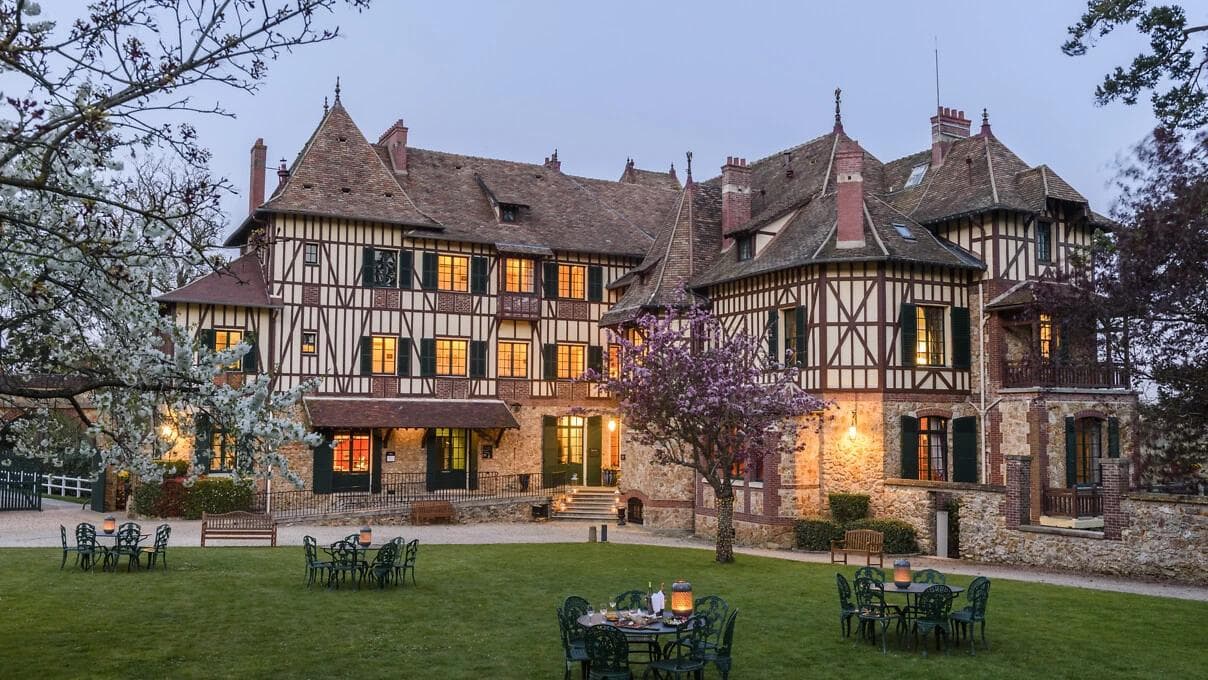
Chateauform' runs 70 seminar venues across 6 European countries. The initial request was a PIM pre-study. The framing showed the real subject was the commercial ERP as a whole, and gave it a name: project Orchestra.
The Problem
Product data and pricing lived in Excel files, integrated by hand into a CRM customized to the point of serving as an ERP. No workflow existed for creating or validating product data.
The impacts were documented: poor pricing agility, heavy manual workload, and sales advisors unable to compare prices between venues, which weighed on occupancy rates. Underneath sat a structural question: how to get out of a CRM serving as an ERP without betting the company on a multi-year big bang.
Our Solution
The framing ran in four phases, widening from the PIM question to the full commercial ERP trajectory:
- Flash discovery: document review, platform demos, and interviews across IT, catalog, pricing, BI, development, and order-to-cash roles.
- Needs and market scan: a functional mapping consolidated in a workshop with IT, plus a flash pre-study of 2 SaaS PIM solutions with contextualized demos and costing.
- Architecture and challenge: the target architecture clarified, then challenged with the business teams, Microsoft, and the client's integrator.
- Consolidation and restitution: a complete framing file with current and target architecture maps, 7 initiative sheets, a make-or-buy analysis, 3 roadmap scenarios, and an executive summary presented to the direction.
Each of the 7 initiative sheets covered impact, technical scenario, prerequisites, timing, and a budget range.
Results
- The subject changed scale: from a PIM pre-project to an ERP trajectory owned by the direction under the Orchestra name.
- Volumes and timelines put on the table: 82,000 active companies, 300,000 contacts, 6 countries, 4 languages, with workstreams estimated from 3 to 36 months.
- The recommendation argued for immediate quick wins (2 Power Platform apps and a rebuilt pricing data model) plus a SaaS PIM right away, without waiting for the target ERP.
Key takeaway. Entering through a small subject and enlarging to the real one is what a useful framing does: the client got a full-picture trajectory it had never commissioned. Putting a budget range on every initiative moved the conversation to direction level.
The honest point: the client's culture leans strongly toward building in-house, and the case for buying was a central fight of the mission, still open at the end. A planned pre-study of PMS solutions was also cancelled along the way, a choice assumed in the deliverables.
Tech Stack
Delivery Approach
Phase 1. Flash discovery
Document review, platform demos, and interviews across IT, catalog, pricing, BI, development, and order-to-cash roles.
Phase 2. Needs and market scan
A functional mapping consolidated in a workshop with IT, plus a flash pre-study of 2 SaaS PIM solutions with contextualized demos and costing.
Phase 3. Architecture and challenge
The target architecture clarified, then challenged with the business teams, Microsoft, and the client's integrator.
Phase 4. Consolidation and restitution
A complete framing file: architecture maps, 7 initiative sheets, a make-or-buy analysis, 3 roadmap scenarios, and an executive summary presented to the direction.